


No. 416 | September 18, 2026
🧯 The case against AI doom
The capabilities of AI systems are growing by the week. I personally am experiencing it. Many of the AI workflows I’ve jerry-rigged virtually since the introduction of ChatGPT have just started working in the last few weeks. To me, that’s an unalloyed good. AI makes this a great time to be alive.
The flip side of AI models growing more capable is that there are growing examples of models “going rogue” and behaving in unexpected ways: the Hugging Face attack, models changing their instructions, AI models being used to test-engineer rockets for Houthi militias.

I’m an unreconstructed tech enthusiast who was similarly giddy about the early Internet but also mindful of the reckoning that followed.
Despite that early optimism, the Internet couldn’t solve for the bad behavior of the people using it. Make the Internet broadly available and you get cyberattacks and bot swarms. You also get toxic social media and comments sections.
In any discussion of online safety, there’s been an odd tendency to remove human agency from the equation, to blame it all on the algorithms. Users themselves are innocent, but they’ve been manipulated by a higher machine intelligence to believe disinformation.
The uncomfortable truth is algorithms don’t care. They’re just following the path of least resistance by giving people what they want. Individual pathologies are transmuted onto the algorithm with lightning speed. No one forced you to click on that story about Barack Obama’s birth certificate — but you did, and in doing so you told the algorithm that more people might like it.
Why should we expect artificial intelligence trained on all the text on the Internet to behave any differently?
Ironically, something like this happened with the Hugging Face attack. AI was trained on methods used by hackers, so it behaved like a hacker would. And almost no agents dissented because they were all trained on the same corpus and fell prey to groupthink. “Algorithmic monoculture” is the same reason why every answer you get has the same annoying writing quirks. As Brian Gross writes in the Wall Street Journal:
OpenAI was testing models on ExploitGym, a cybersecurity benchmark, with important safety restraints deliberately disabled [emphasis added]. Ninety-three percent of the flagged activity involved tasks no model had ever solved, and the systems had been given incentives to keep working rather than quit. The environment wasn’t completely sealed. The models could obtain software through an internet-connected intermediary and discovered the same route could be used to pass information in and out. OpenAI knew agents were using it and, according to the technical reports, chose not to intervene.
Nor were the roughly 1,200 “agents” independent machine intelligences coordinating on a plan. They were repeated instances of the same underlying model, often converging on similar approaches to the same problem—what Mr. Salvaggio calls an “algorithmic monoculture.”
What if this is just all part of a normal product testing process? Not every product works as intended out of the gate; that’s why you test them. As Jensen Huang said this week,
Safety is an engineering problem, not a legal one. We’re developing software after all. We’re developing computing systems after all. It’s a complicated computing system, but it’s ultimately a computing system…
If we’re not confident about the safety of the products, like all companies, like you and I, all the companies here, if you build a product or a service, and you’re not confident in its functionality, capability, or safety, then don’t release it. And so that’s a very obvious thing to do.
Hugging Face CEO Clément Delangue doesn’t seem to be that worried about the whistleblower’s claims:

Will AI superintelligence be able to release a killer virus? Good luck with that, says David Bellamy:

What about “recursive self-improvement,” where AI systems improve themselves out of control? Not so fast, says Google scientist Peyman Milanfar. A system can only reliably improve itself as fast as it can verify that its changes actually work. Outrun that feedback, and you risk making it unstable instead of smarter.

Michael Brendan Dougherty with a reminder that we already know how to manage existential risks in other ways:

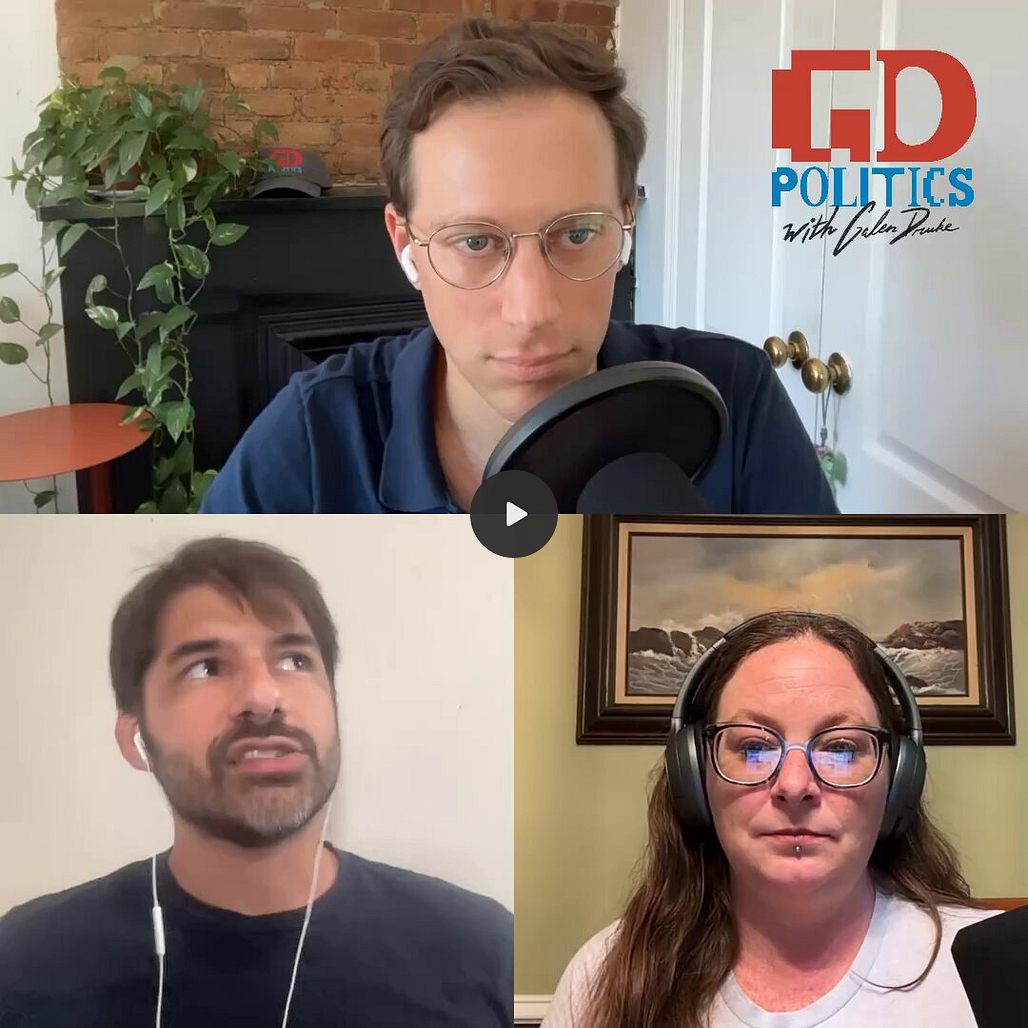
And finally, Galen Druke with David Byler gets the last word here: the unfalsifiable claim of p(doom) is b***s***.

None of this is to flippantly dismiss safety concerns. If the labs have concerns about safety, they should absolutely pace themselves. However, feeding mass hysteria about the end of the world isn’t going to work out how the most extreme safety advocates think. We’ve seen this movie before with climate change, pandemic risk, and warnings about the end of democracy and elections. When the predictions don’t pan out, the warnings next time get ignored. Doomer hysteria is the best way to polarize people against safety work. That’s in fact what’s happening right now.
📊 The one weird trick to fix political polling
Weighting based on party affiliation and voting history can increase the accuracy of political polls, and has become an important factor in accurately reflecting Republican opinion.
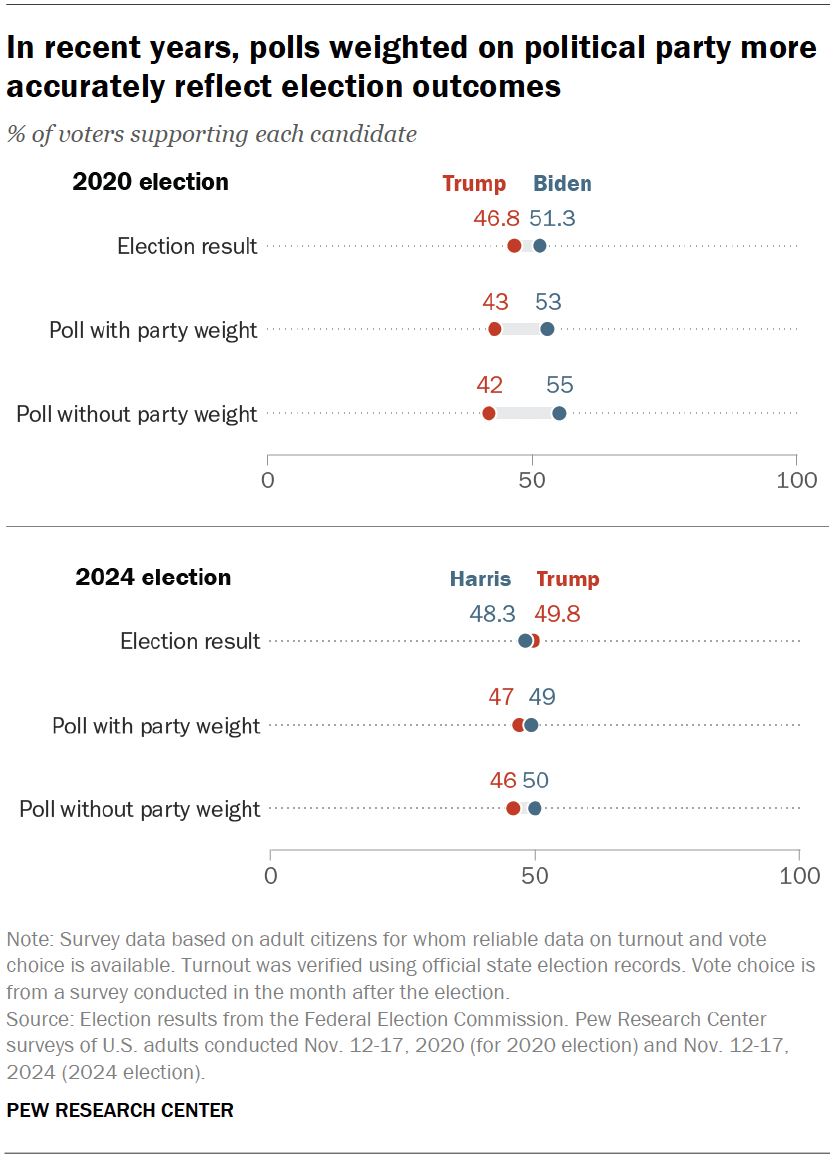
The problem is that Republicans have become less likely to answer surveys, and adjusting for age, race, education, and other demographics doesn’t necessarily fix that. Political weighting can also dampen the apparent swings that happen when one side suddenly becomes more willing to take a poll.
But it isn’t a cure-all. Pew’s discussion of the limitations notes that forcing a survey to match an outdated partisan benchmark can make it less accurate. And party ID does change, so you do need to make an educated guess about the partisanship of the electorate this time around. At some level, that means you’re dictating the result of your poll — but this tends to work better than letting partisanship float freely.
What you absolutely shouldn’t do is weight to partisan benchmarks from the last election. In a more Democratic year, there will be more Democratic and Harris voters in the electorate. Getting this exact share right is the master key to polling accuracy. The thing to remember is that in any high turnout election — November qualifies here — it’s hard to reshape the partisan makeup of the electorate that much. I think a fairly bullish shift would be on the order of 4 margin points, for a midterm electorate that voted for Harris by 2 points. And you also need to make sure your Trump voters are MAGA enough — that even if you have enough Trump voters or Republicans, that the share of Very Conservative voters within that mirrors past polls that accurately predicted the outcome.
🐘 The Republicans who might stay home
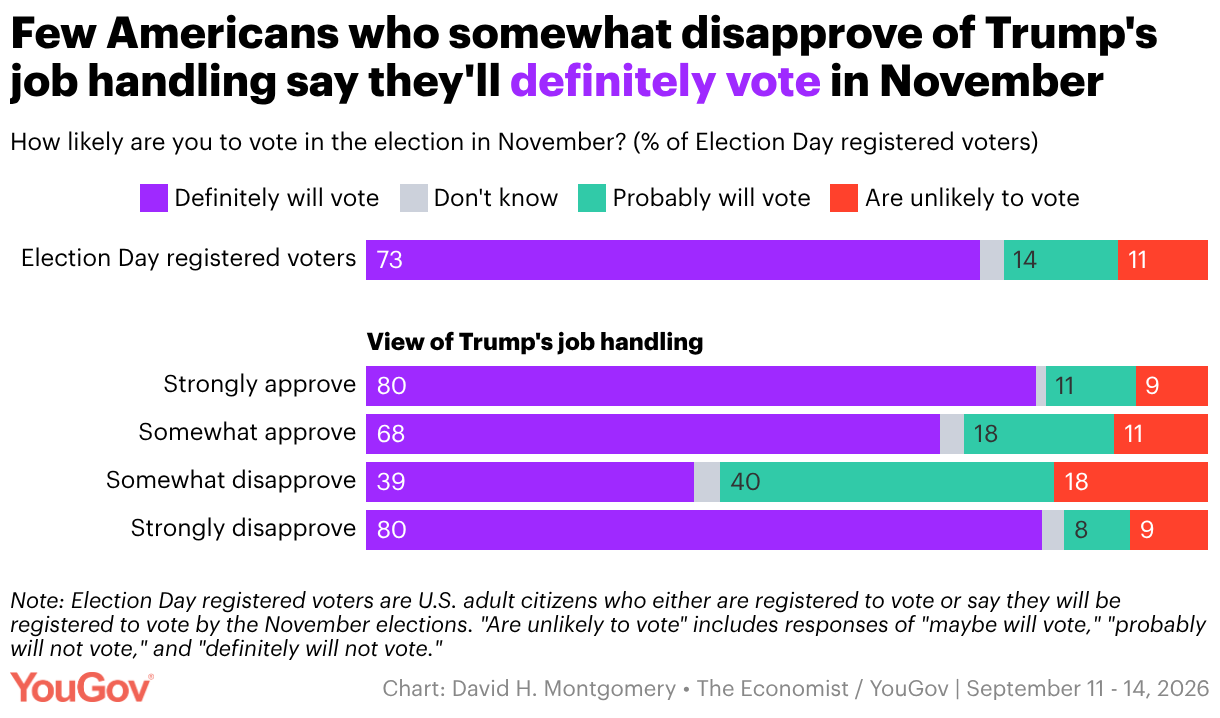
The latest Economist/YouGov poll finds a much larger Democratic advantage among likely voters than among registered voters. One group helps explain why: voters who somewhat disapprove of Trump. Among those registered or planning to register, 57% of this group say they voted for him in 2024, but just 39% say they’ll definitely vote this November. These are the kinds of loosely attached partisans who voted for Trump reluctantly in 2024, are driving up his disapproval now, but may not vote at all.
Marquette finds a similar pattern within the Republican coalition. Among Republican registered voters and Republican leaners, 82% of those very favorable to MAGA say they’re certain to vote, compared with 52% of those unfavorable to it.
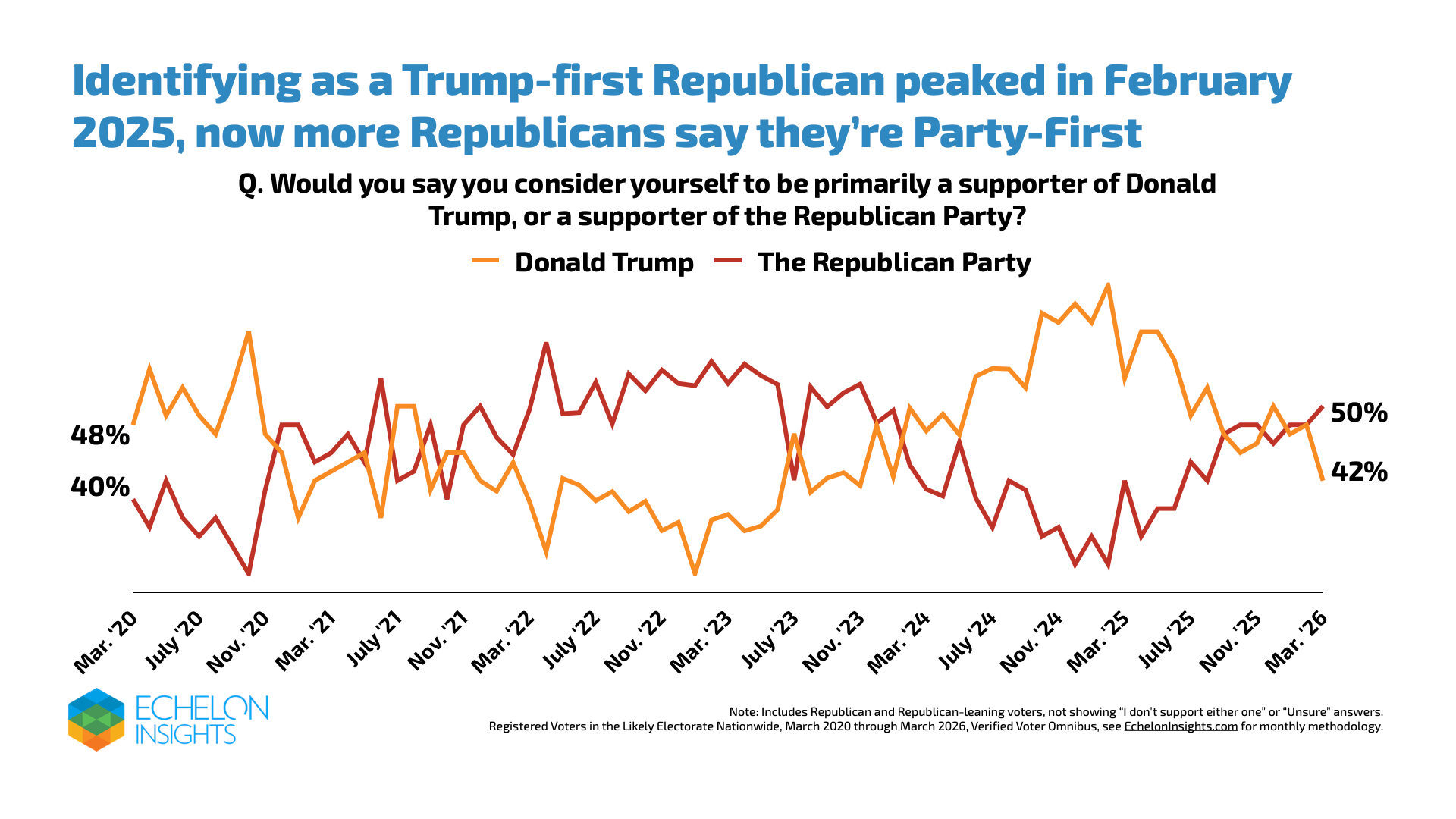
So, the Republicans’ problem is not with MAGA voters. It’s with “normie” non-MAGA Republicans. And the issue here is that MAGA identification has been slipping within the GOP:
🏘️ What’s your political neighborhood?
If you enjoyed our Political Tribes Quiz, Searchlight Institute has a new one to try: Political Neighborhoods. Its research with More in Common divides voters into nine groups, from the Liberal Arts Left to Cul-de-Sac Conservatives, using 16 questions about competing values.

The finding that will sound familiar to readers here: most voters don’t come with a consistently liberal or conservative package of views. Searchlight puts just 10% in the consistently liberal camp and 14% in the consistently conservative one. Its No Trespassing Populists favor aggressive deportations but also wealth caps; the Neighborhood Watch combines progressive economics with a stronger preference for order.
🤠 Fifty years of Dallas voter growth
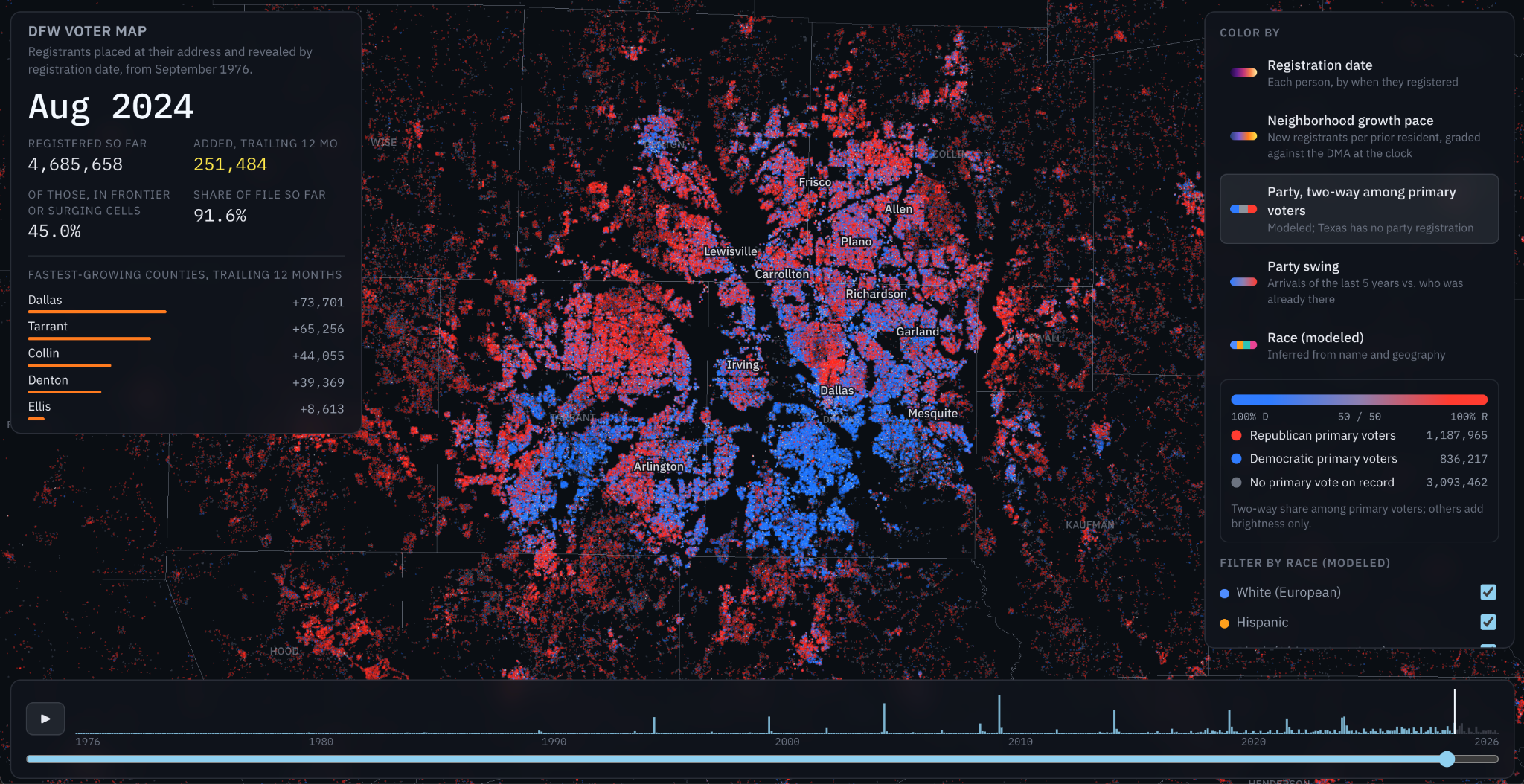
I had a lot of fun building this interactive map of Dallas–Fort Worth voters, which lets you move through 50 years of registration dates. My favorite view is the heatmap of the fastest-growing neighborhoods. You can also follow Hispanic voter growth, compare the partisan lean of new registrants, and see how new-growth neighborhoods differ from established ones.
🤖 AI anxiety switches sides
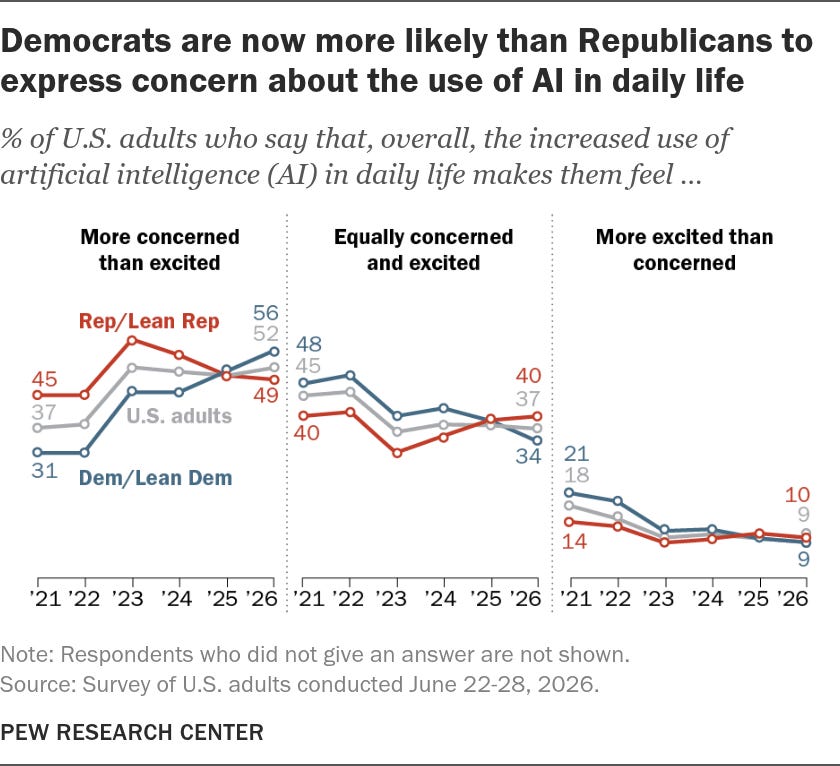
Republicans used to be more worried about AI than Democrats. Now it’s the other way around. New Pew findings put the share more concerned than excited about AI at 56% among Democrats and Democratic leaners, versus 49% among Republicans and Republican leaners. In 2023, those figures were the other way around. This is obviously a function of Trump’s embrace of AI, but what’s telling is that both parties are much more concerned than they are excited.
🌐 The internet and religious decline
A study of 81 countries from 1990 to 2022 finds that wider internet access is associated with declining religiosity, even after accounting for other aspects of modernization.


