No. 418 | October 2, 2026
⛽ The midterms are about gas prices and that’s pretty much it
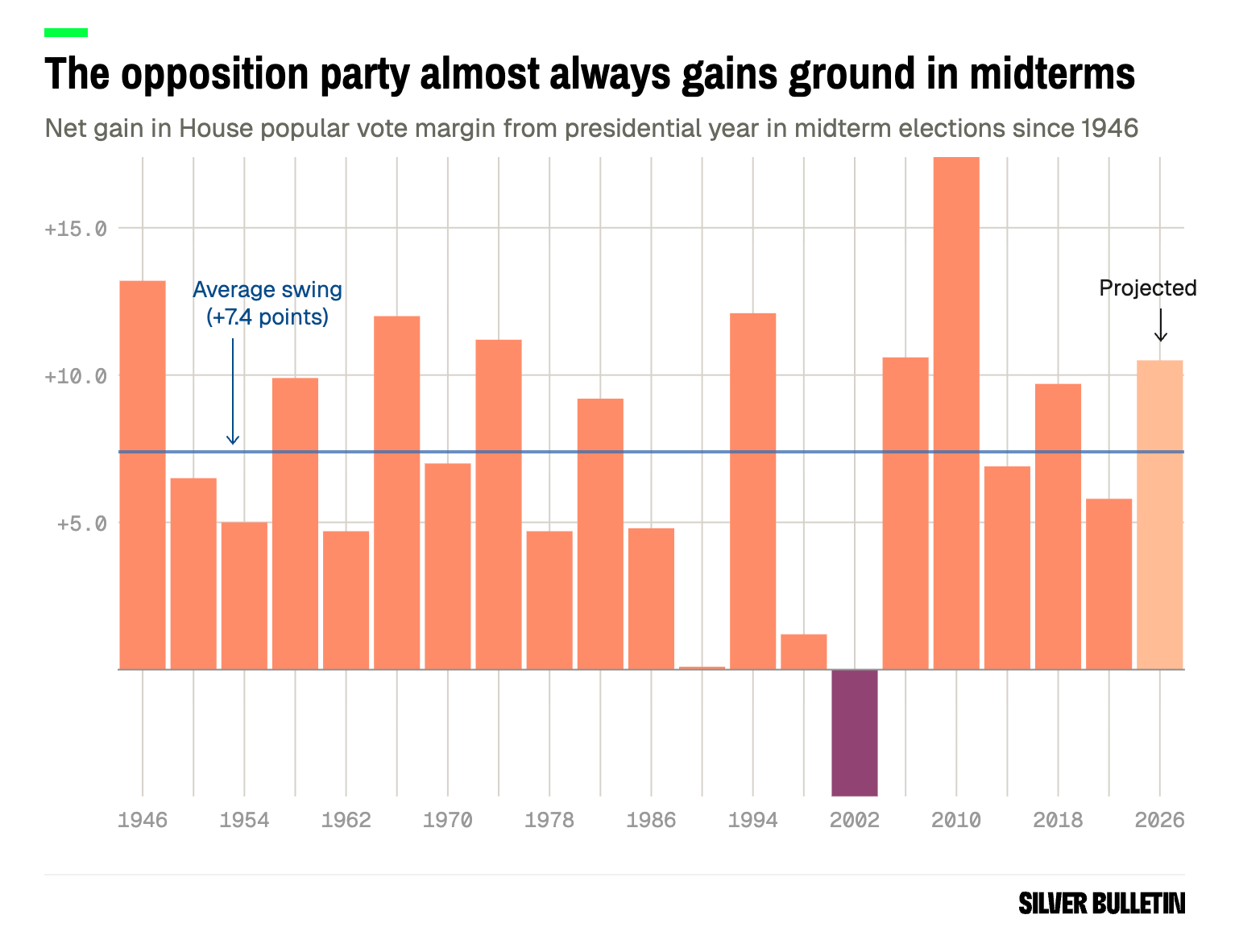
The chart that explains the midterms probably better than any other, via Lakshya Jain:
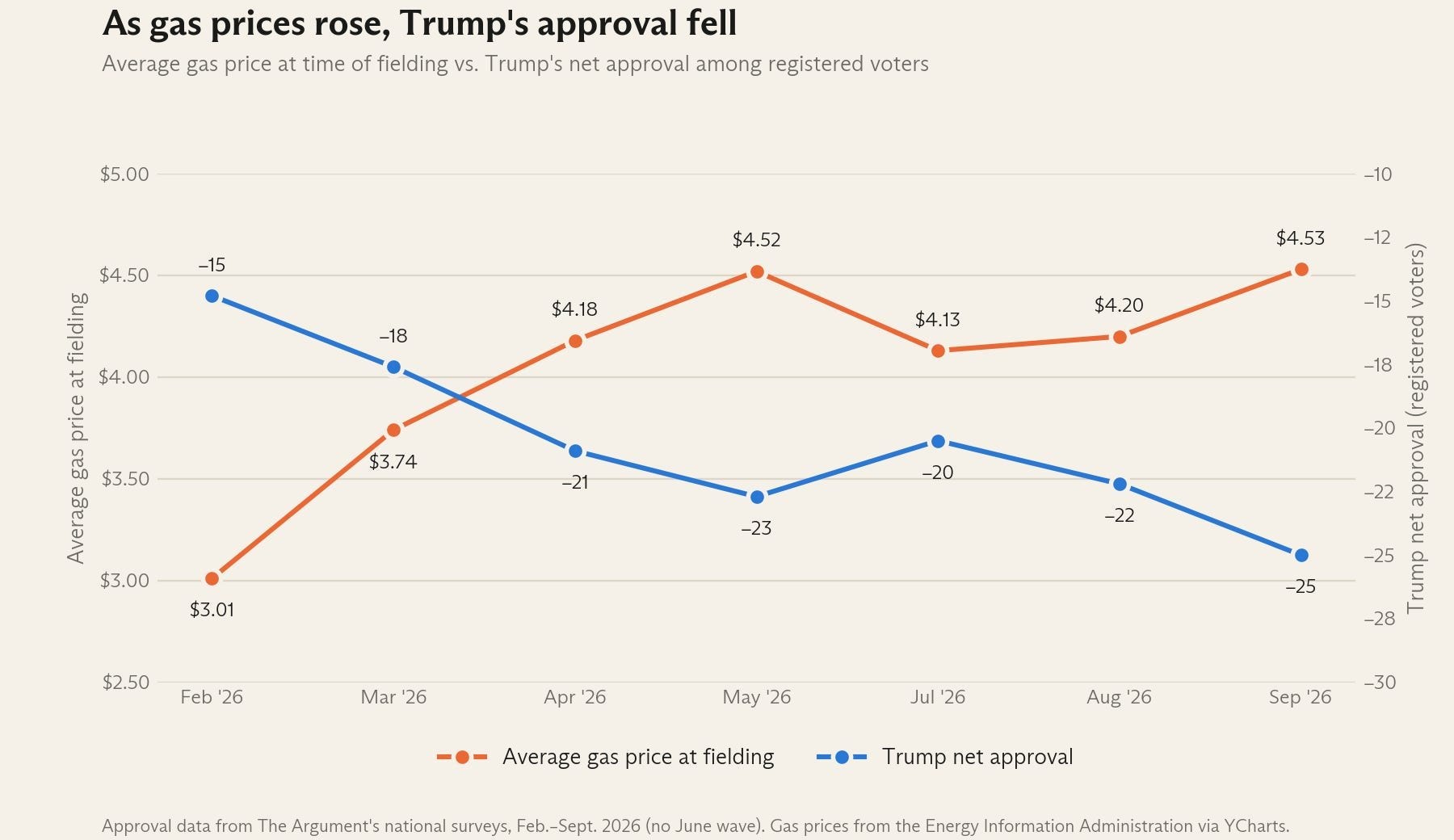
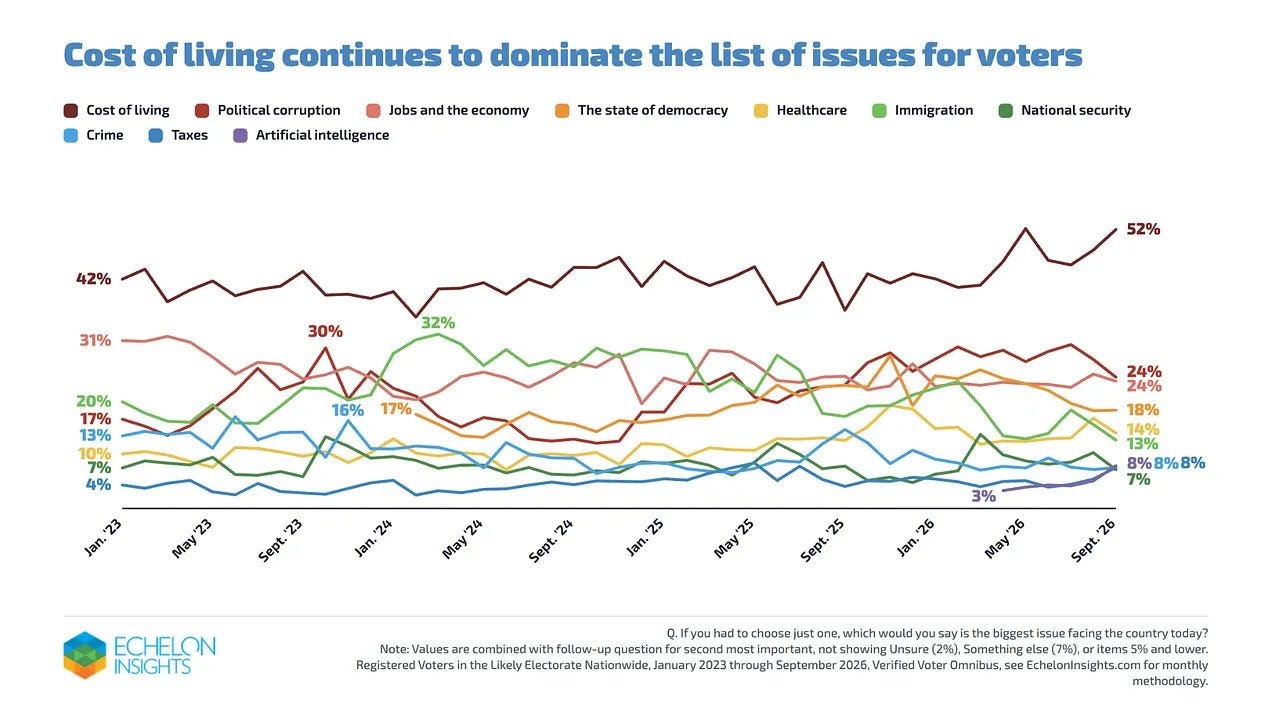
Not only do fluctuations in Trump’s approval rating closely track gas prices, which have risen during the war in Iran, but the cost of living dominates the public consciousness more than it did during the 2024 election. 52% of voters say the cost of living is one of the top two issues, a number that’s spiked since the war started. While Washington wants to talk about data centers and AI, just 8% say AI is one of the top two issues. That number surged in the last month but is nowhere close to bread-and-butter economics as the main source of voter dissatisfaction.
In January 2025, we asked voters what they wanted Trump to prioritize in his second term. This month, we asked them what they thought he had prioritized. The disconnect is telling: 85% wanted Trump to make the cost of living a top priority, but only 40% think he has.
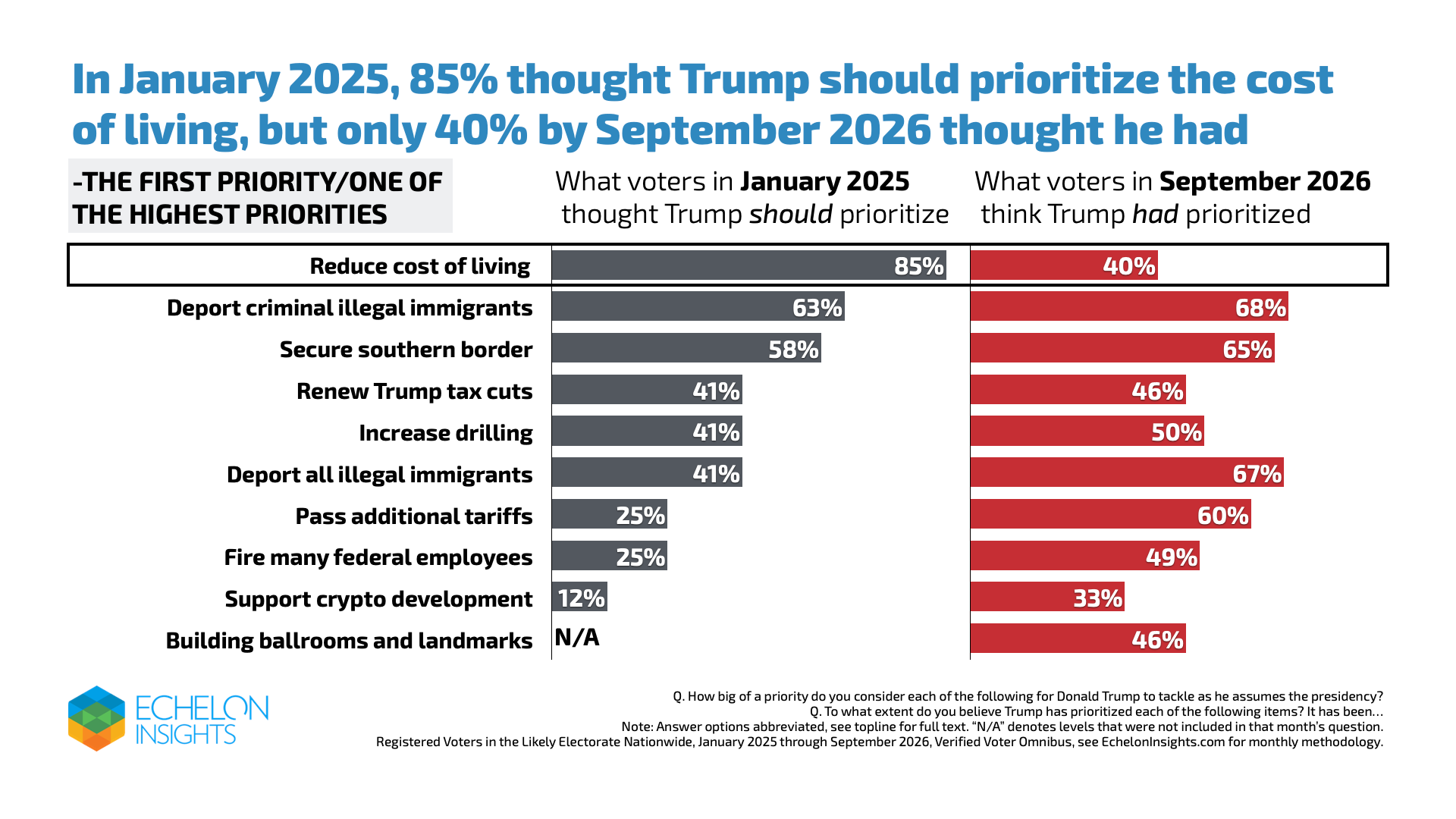
What do the voters think has defined Trump’s second term? Immigration and tariffs. Three immigration-related issues top the list, with border security and deportations of criminal aliens appropriately prioritized, and deportation of all illegal immigrants over-prioritized relative to the start of Trump’s term. Tariffs (which have also driven cost-of-living anxiety) are next, with 60% saying they’ve been one of Trump’s highest priorities compared to 25% who thought they should have been.
We didn’t ask about building a ballroom or new Washington, D.C. landmarks in January 2025, but more voters think Trump has focused on that (46%) than on the cost of living (40%).
As Nate Silver writes, it’s very hard for incumbent parties to avoid losing seats. But they can at least try to mitigate their losses by prioritizing the voters’ #1 issue.
🗳️ A familiar Senate polling problem
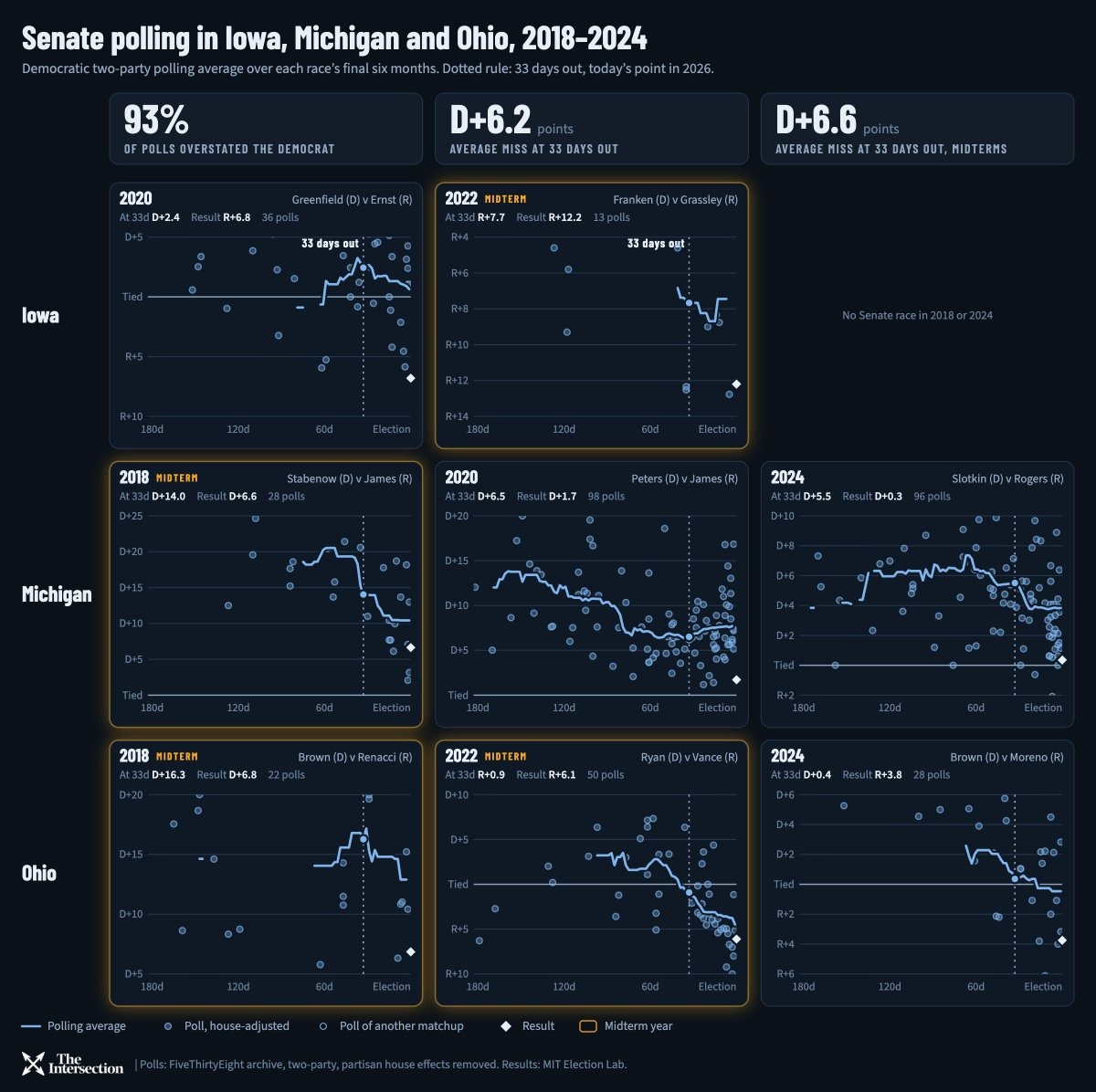
This election is a tug-of-war between the fundamentals and the map. Democrats continue to look strong in polling, especially in the Midwest. But if there is a polling error, the Midwest is where it’s likely to be. I broke down the polling in Iowa, Michigan, and Ohio from 2018 to 2024: 93% of past-cycle polls in these three states overstated the Democrat. At 33 days out, polling averages missed by 6.2 points in Democrats’ favor, and by 6.6 points in midterm cycles. That history doesn’t guarantee another miss this year, but it’s a reason to be cautious about apparent Democratic strength in these states.
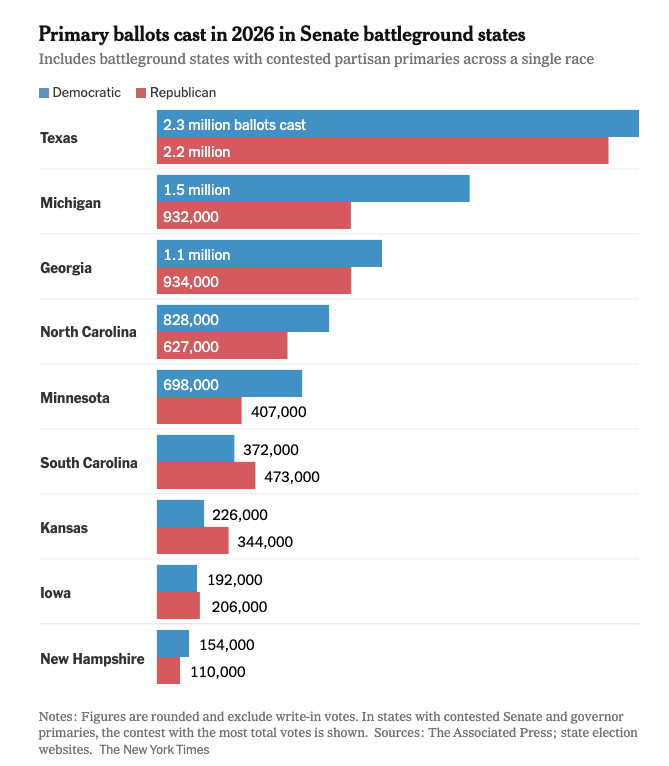
📮 A surge in Democratic primary turnout
Historic Democratic turnout numbers might suggest a Democratic edge in November. However, unlike during the 2018 elections, Republicans may have insulated themselves from a blue wave with redistricting efforts and deeper pockets.
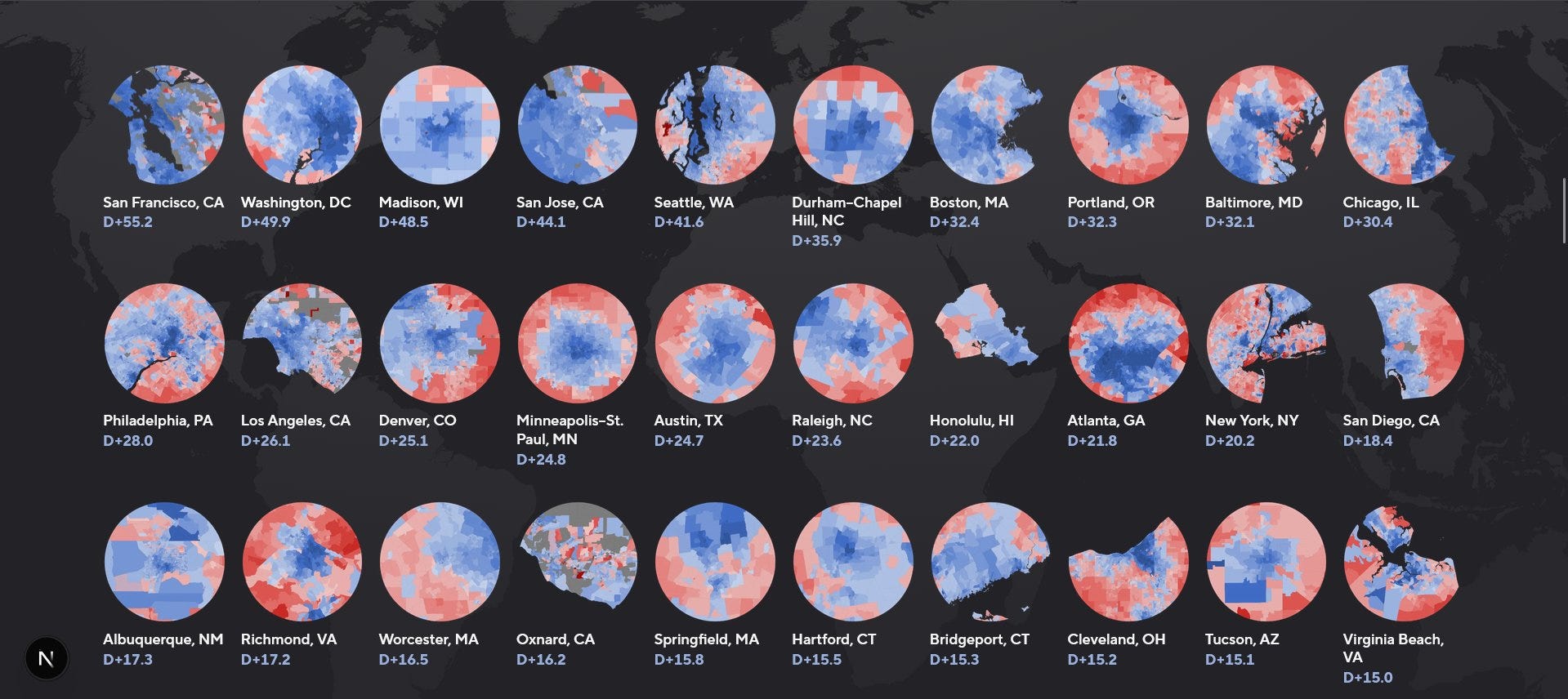
🗺️ The US’ 30 bluest metropolitan areas mapped
San Francisco, CA, tops the list of the 30 bluest metropolitan areas analyzed by Votehub’s Josh Metcalf. Washington, D.C., is second—bluer than Madison and Seattle.
🤖 AI agents fail at replacing survey respondents
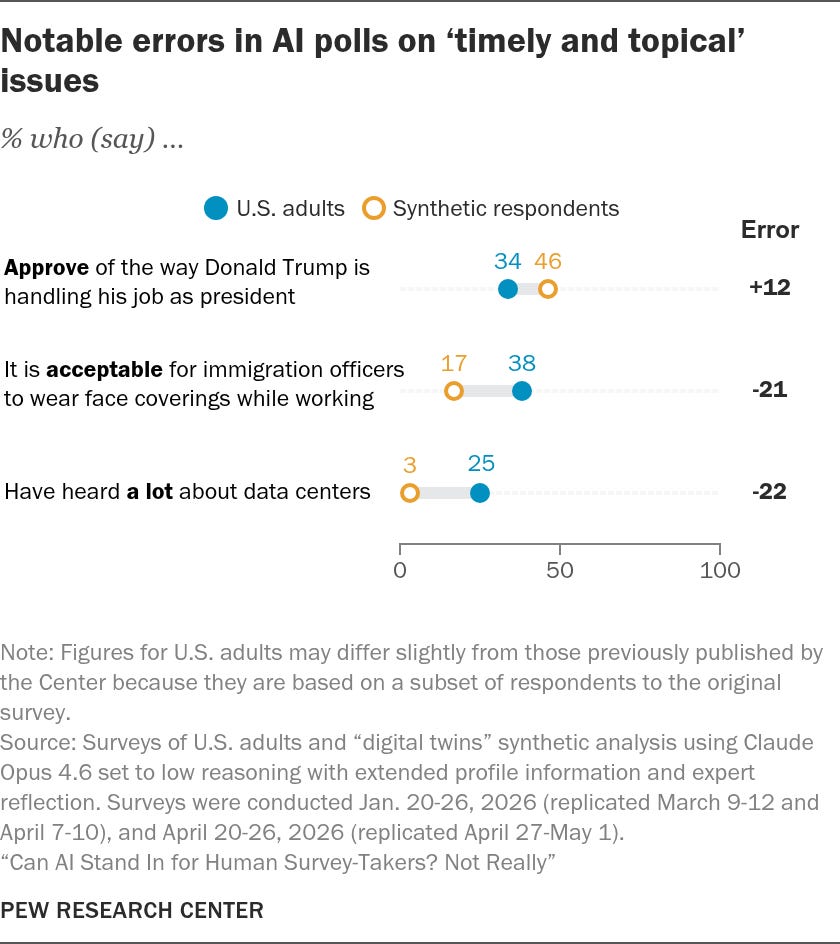
AI survey respondents differ from human respondents by an average of 12 points. Synthetic respondents make errors in unpredictable ways and results heavily depend on the model used.
🍽️ Americans are no longer having people over
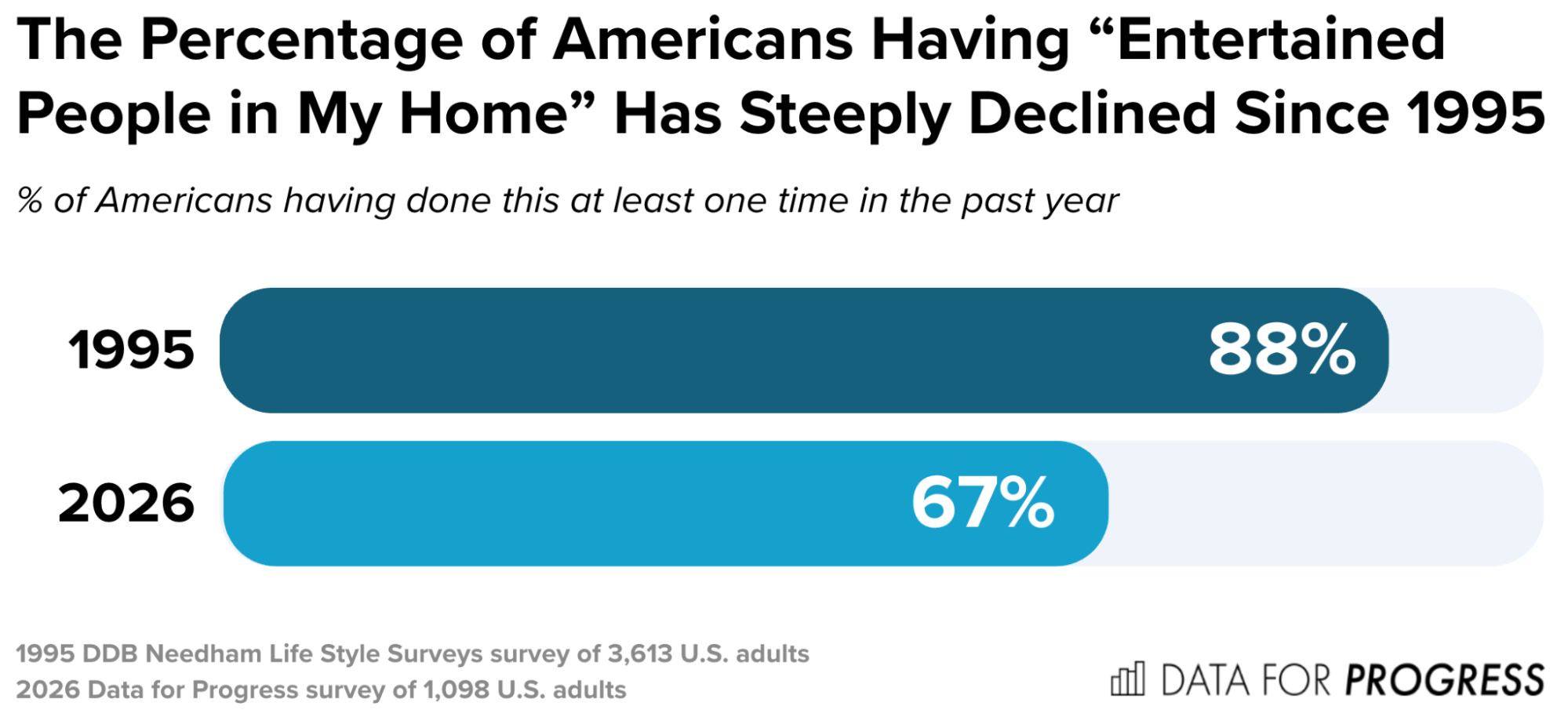
Derek Thompson writes that the share of Americans hosting friends or family at least monthly has fallen from 42% in 1975 to 12% in 2026. Even having someone over once a year has become less common: 67% now report doing so, versus 88% in 1995. Thompson points to busy households, intensive parenting, and the ease of entertaining ourselves alone. But this retreat from social life started long before smartphones.
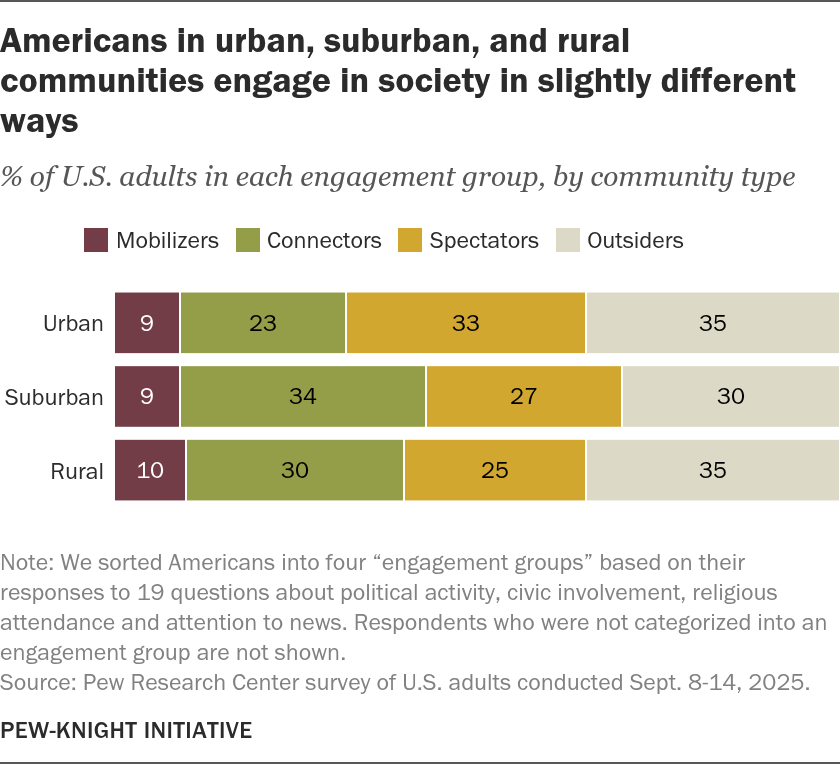
Pew adds to this discussion with a new typology of social and civic engagement, analyzed across urban, suburban and rural communities. “Mobilizers” are active across politics, community life, news, and religion; “Connectors” volunteer, donate, and join groups without being especially political; “Spectators” follow the news but participate less directly; and “Outsiders” are less engaged across the board.
Urban adults are more likely to be Spectators, while suburban adults are most likely to be Connectors. The most and least engaged groups are fairly similar across community types. Where rural life stands out is the setting: among adults who belong to a group, 63% say it mainly meets in person, compared with 57% in suburbs and 47% in cities.
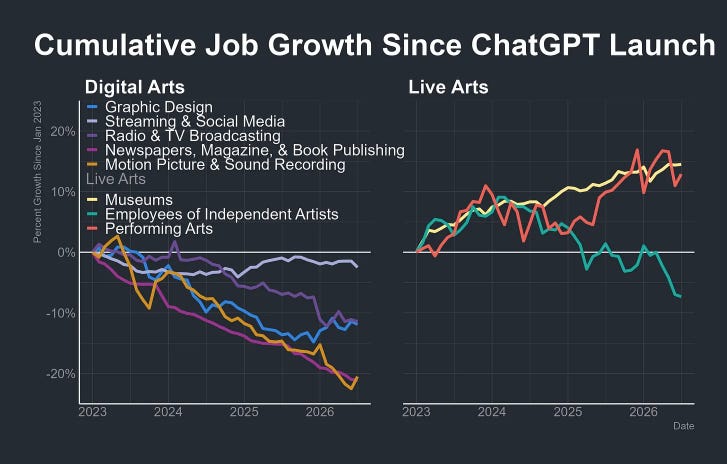
🎨 AI job replacement hits digital artists hardest
Since the launch of ChatGPT, America has lost 200,000 jobs in the digital arts. While hiring in live arts continues to grow, AI might make TV and radio go the way of the newspaper.