No. 421 | October 23, 2026
🤡 Fake polls roil the closing stages of the campaign
Earlier this week, Wedgewood “Polls” confessed in a social media statement to fabricating raw survey data and polls following a forensic analysis of its purported raw survey data by FiftyPlusOne.
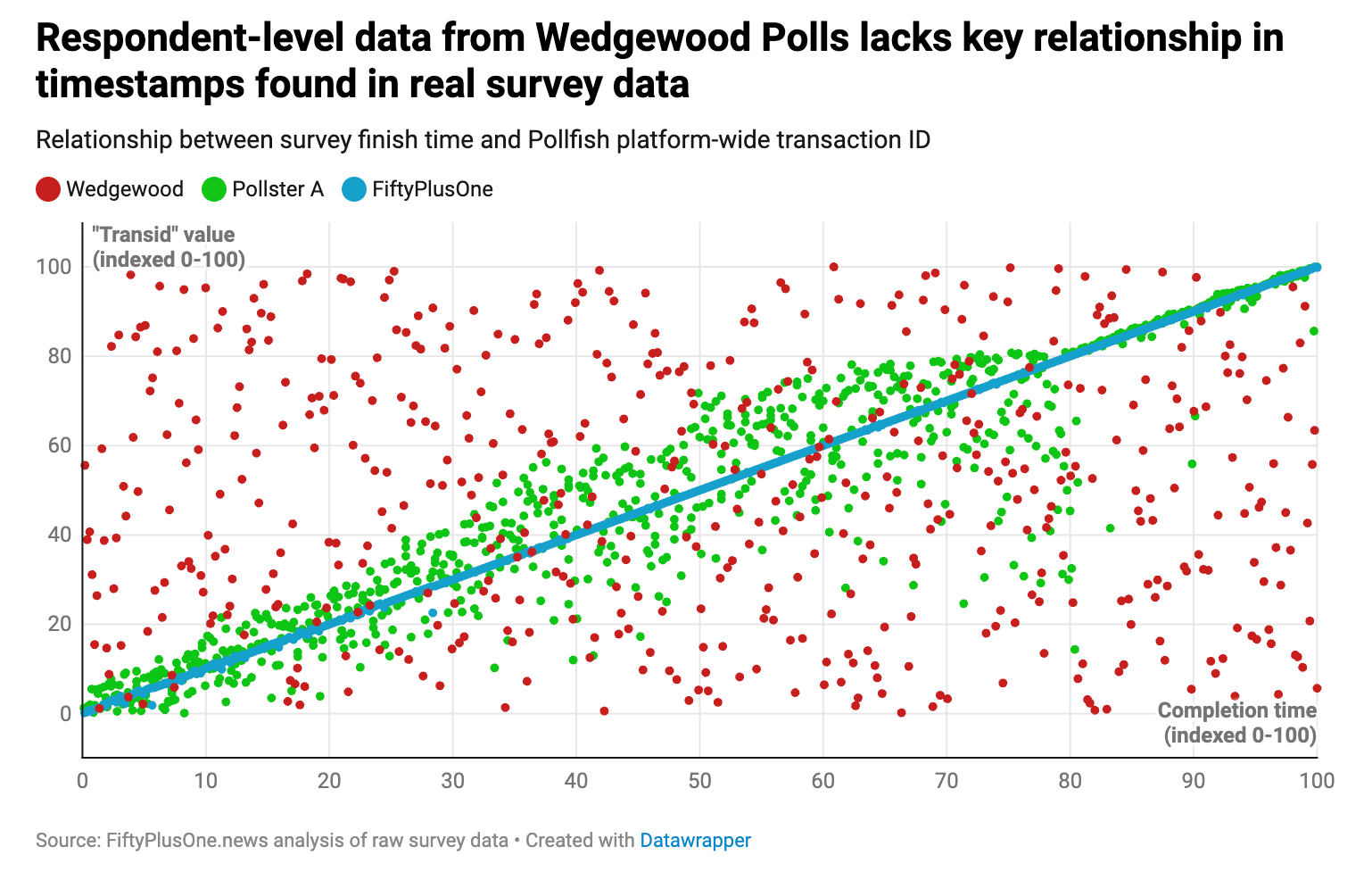
That’s not the first fake pollster to get caught this cycle. Median Strategies copped to a “social experiment” that saw its “polls” amplified by the news media and by candidates in races it was polling. “The Public Sentiment Institute” was caught changing respondents’ answers to a Florida candidate it was conducting undisclosed polling for. TPSI pollster Lester Tellez, who is currently in felony pre-trial diversion, is back crowdfunding polls in battleground states that are being shared widely on X. Their most recent methodology statement contains this gem copping to the same response-switching that got them in hot water in Florida: “Undecided voters are allocated based on how decided voters with similar views and backgrounds plan to vote, and a small share is left undecided.”
Just to be clear, legitimate pollsters don’t change respondents’ answers.
FiftyPlusOne also conducted a follow-up investigation of the X-native SoCal Strategies suggesting its data was likely fabricated. Following the post, SoCal took down all their social media accounts. Suspicious patterns in SoCal’s releases were flagged back in 2024.
There’s also a connection between Tellez and SoCal Strategies, who’ve worked closely together and in 2024 crowdfunded more than $10,000 for polls that were possibly fake.
The Internet is full of scams and bad-faith actors. You shouldn’t be surprised to see this creeping into coverage of polling and elections given obsessive audience demand for polling in the run-up to elections.
Are you the kind of person who would be happy if a new state that was on no one’s radar came online and was suddenly competitive for your side? If you’re a partisan active on social media, you probably would be. And you might even be tempted to chip in a few bucks to a crowdfunding campaign to make sure the race got polled.
But what if this was just a scam and the poll was never actually done?
It’s trite to say that the political machinery is way too poll-driven, but at the heart of the problem are political hobbyists online who engorge themselves on polls, many conducted on the cheap. Most of the fake pollsters claimed to be using Pollfish, a platform that delivers responses for $1 a piece. But most of these would-be pollsters have no paying clients and in fact probably don’t have a spare $600 lying around to poll the Mississippi Senate race. So, faking it is the logical next move.
Fake pollsters are a problem. So is the audience inclined to believe them because it wants more polls that reinforce its partisan priors.
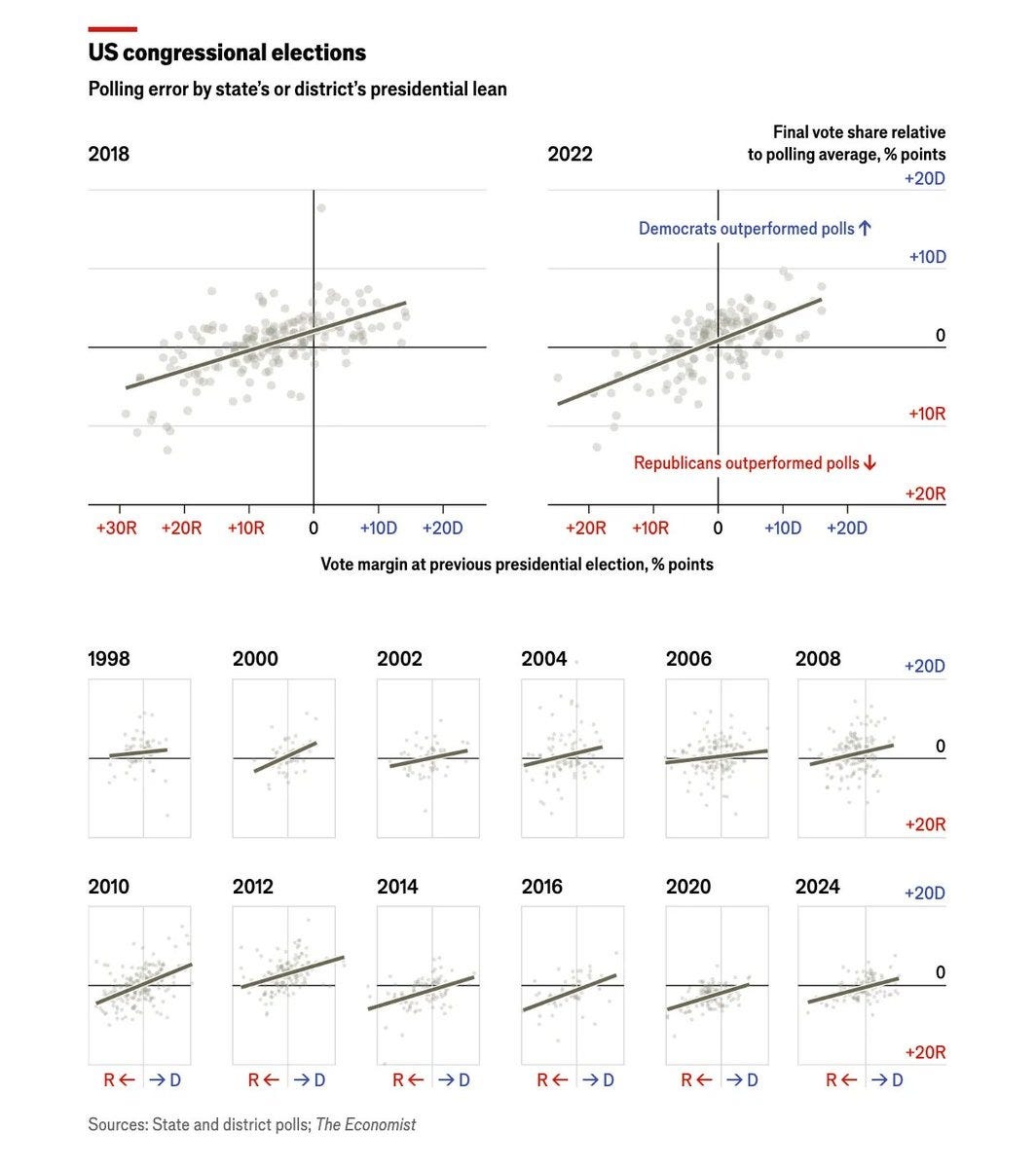
📊 This polling error trend dates back 28 years
Since 1998, Republicans have outperformed polls more in red states than blue states. As I’ve been saying, that matters a lot in a year when most of the key Senate battlegrounds are in red states!
🗺️ A blue wave doesn’t guarantee a flood of House seats
An eight-point Democratic lead on the generic ballot could still produce only modest House gains by historical measures. Sean Trende reminds us that there are fewer GOP-held purple districts that fueled past waves. It’s taken a strong Democratic generic ballot advantage of 8 points or more to breach the Trump +9 seat line where the gains start stacking up.
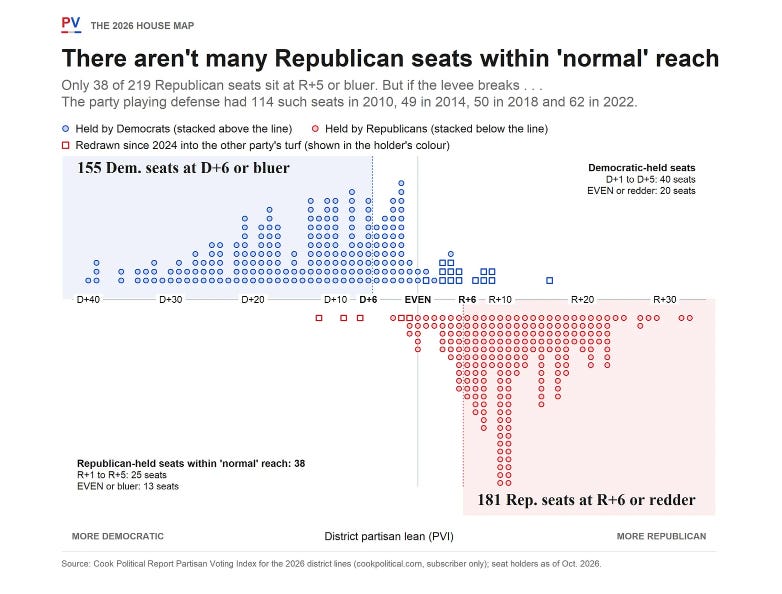
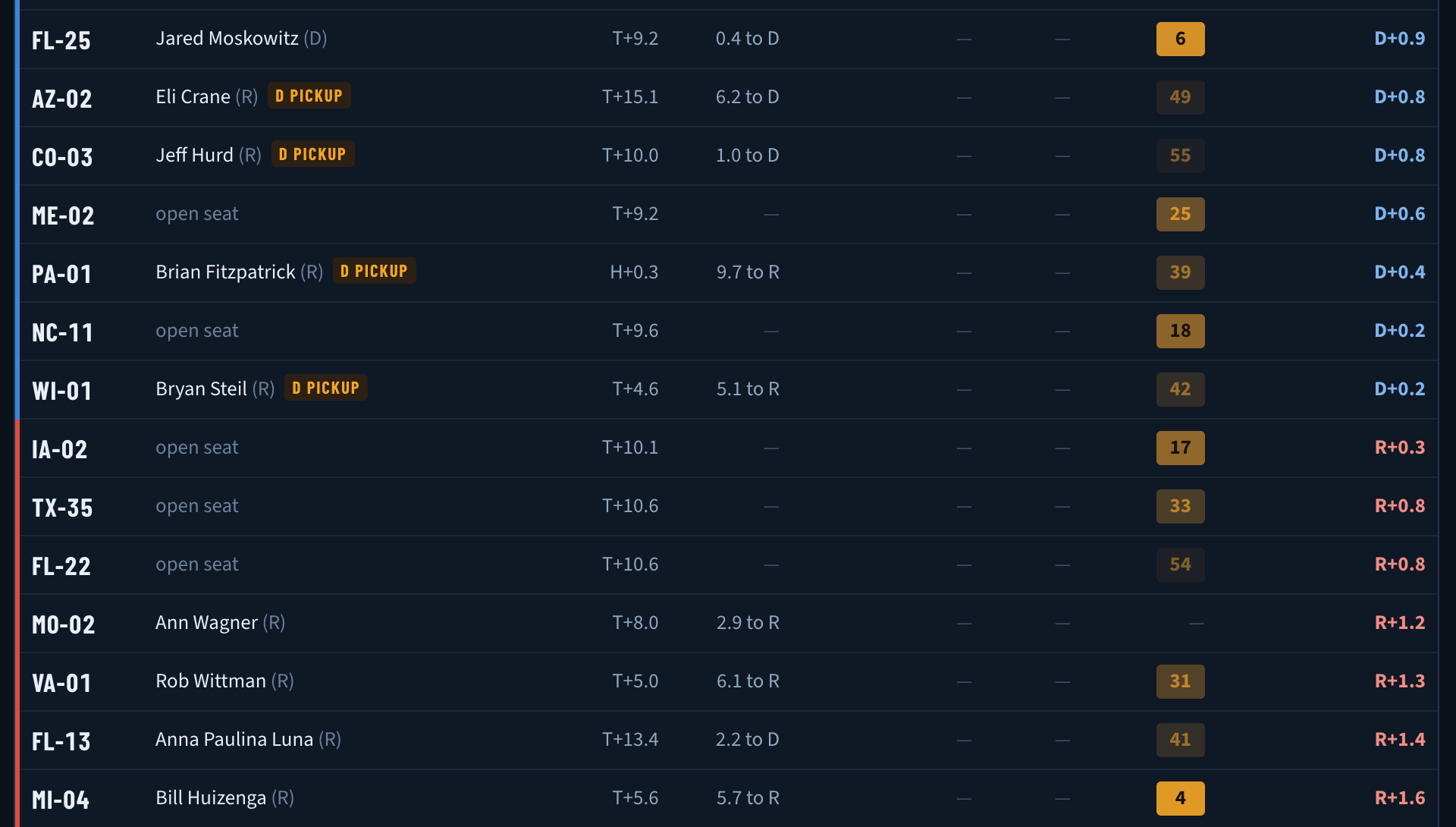
In Levee Math, Trende follows up with 10 badly needed congressional district polls from Emerson that show just how much Democrats could encroach on Republican territory. The results yield some surprising Democratic overperformances, such as in North Carolina’s 11th district, but mostly they’re about what you’d expect in a D+8 environment where our prior should be that a Trump +10 district has about a 50-50 chance of flipping. Here’s what the Swingometer says should be the closest House races if the election were held today, taking into account past incumbent performance but no district-level polling.
📺 Spending more to air less
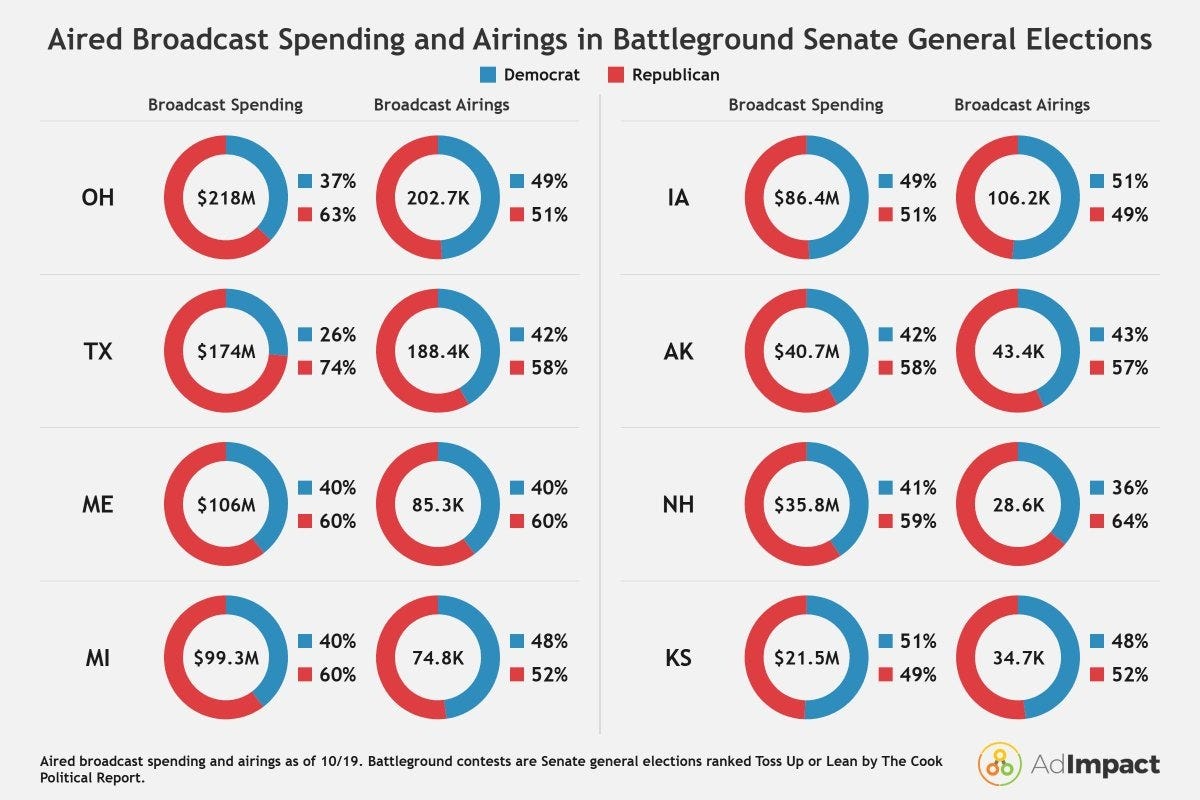
Republicans are outspending Democrats in most Senate battlegrounds, but their cash advantage isn’t buying a proportional share of airtime. Despite spending $82.3 million more than Democrats in Texas, their ads only make up 58% of broadcast airings. It’s the same story in Ohio: Republicans account for 63% of overall broadcast spending but just about half of the airings, 51%.
The reason is that most Republican spending runs through PACs that don’t get the same low TV rates as candidates. At the same time, I don’t think you’ll see Republicans batting an eye at these numbers. Candidates have to spend inordinate amounts of money and time raising money. Super PACs can raise them easily from a few donors.
🏛️ A look at the governors’ races
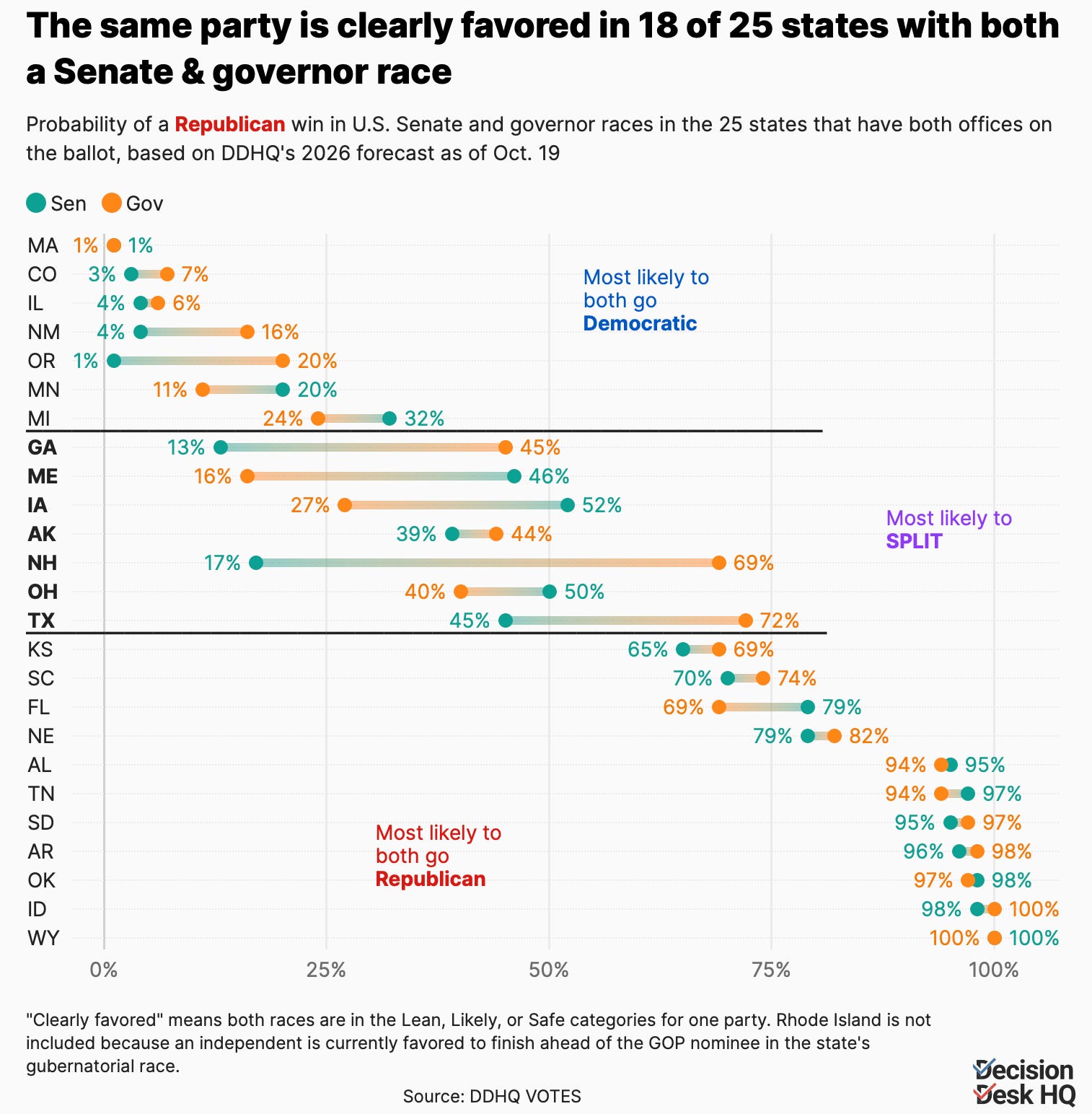
Split-ticket voters are few and far between these days, but ticket-splitting is more common in gubernatorial elections without national political implications. DDHQ ranks a total of seven states as being most likely to split their ballots between Senate and governors’ races, including Georgia, Maine, New Hampshire, Ohio, and Texas.